

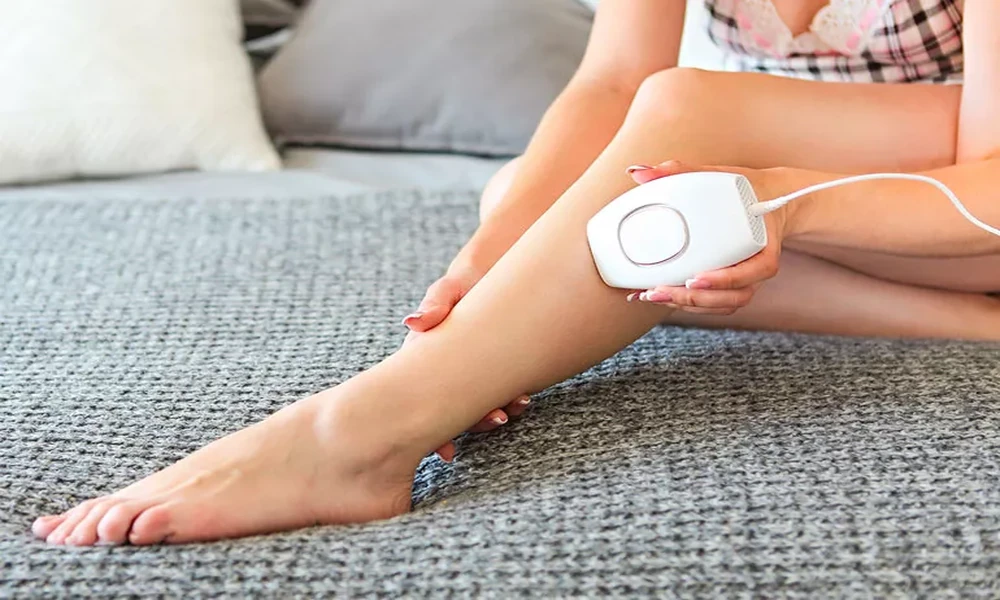
A hair-removal laser targets pigment, so a visible grey hair is not equivalent to a dark hair simply because both are equally unwanted. When an area contains a mixture of colours, do not expect the whole mixture to respond uniformly. The colour of the hair belongs in the decision before a smooth, hair-free image becomes your assumed outcome.
This can become relevant gradually. Someone who has removed the same facial or body hair for years may notice that some strands have become lighter while others remain dark. The area has the same familiar name, but its hair is no longer a single-colour target. A treatment description written for a broad audience may not make that personal distinction obvious.
The target is pigment rather than visibility
Health Canada’s cosmetic-laser guidance explains that hair reduction targets melanin, the dark colouring in the hair follicle. It also notes that the procedure is less effective on blond, red, grey or white hair. The basic limitation concerns what absorbs the light; it is not a judgement about how noticeable or bothersome the hair is.
That distinction answers an apparently reasonable objection: “But I can see the hair clearly in the mirror.” Visibility is influenced by the background, lighting and the length of a strand. Seeing a pale hair against a dark shirt does not establish that it presents the same pigment target as a dark strand. Your eye and a treatment device are doing different jobs.
Thickness and colour should also keep their separate meanings. A coarse-looking light hair need not behave like a dark hair just because it feels substantial. Conversely, calling every light strand grey can hide differences you have not actually examined. Describe what you notice without trying to classify each follicle or choose equipment for it.
None of this means that every person with some grey hair has the same treatment prospects. It means that a general promise about unwanted hair needs to be considered against the actual mixture present. The useful starting observation is specific: some hairs are dark, some are light, and the ones that bother you most may not be the ones a laser can readily target.
One area can contain hairs with different prospects
Imagine an ordinary, hypothetical situation: a person is bothered mainly by a few pale chin hairs, with some dark hairs nearby. An advertisement showing a smooth chin may encourage the assumption that treating the area addresses the chief complaint. But if the light hairs are the main concern, reducing dark hairs would not necessarily deliver the change that motivated the purchase.
The reverse preference is possible too. Someone may chiefly dislike the dark strands and be comfortable continuing to manage a small amount of light hair. These are different goals even when the body area is identical. Neither requires an invented success percentage. The point is to identify which part of the mixture matters to the person making the decision.
When reading the Vaughan laser hair removal description from Elysium Beauty, keep that mixed-colour picture in view. Compare your reason for considering the service with the hair you actually want addressed. “I want less dark hair here” and “I want these pale strands gone” should not silently become the same request.
A broad area label does not resolve the distinction. The upper lip, chin or legs can each contain hairs with differing characteristics. Nor should another person’s result settle it: their visible mixture and principal concern may have been unlike yours. A familiar area name makes the story recognisable without making the biological target identical.
Choose an outcome that still makes sense for the hair you have
The Canadian Dermatology Association’s hair-removal guide discusses pigment targeting and the limited response of blond, red and white hair. It also explains that laser treatment does not remove every hair in an area. Those facts make a blanket expectation of complete clearance especially unhelpful when the starting hair already varies in colour.
Consider the everyday consequence rather than an imagined perfect photograph. Would you still find the remaining light hairs bothersome? Would a reduction concentrated in the dark hairs meet the purpose you had in mind? You can answer those preference questions without predicting a medical result or deciding what procedure is appropriate.
It is better to discover that the likely category of change would not interest you before buying a series. A service can have a legitimate purpose while failing to answer your particular wish. There is no obligation to redefine your goal from removing pale hair to removing whatever hair the technology can most easily address.
An individual assessment should then explain the realistic options, relevant risks and uncertainty for your hair and skin. Bring the actual concern into that assessment. You do not need to request a more powerful machine or arrive with a technical solution to the pigment issue. Understanding the limitation is useful precisely because it prevents a personal preference from being mistaken for a device instruction.
Do not turn a colour limitation into a home experiment
Changing how hair looks on the surface is not a way to establish how a follicle will respond. Do not improvise a preparation routine to make light hairs resemble a better laser target. Leave product use and treatment preparation to the applicable directions and the assessing professional, rather than trying to solve a biological limitation through a cosmetic trick.
If you already colour, bleach or otherwise treat the area, give an accurate account of that use. A description of what you have actually done is more useful than a guess about what the hair would look like untreated. Avoid adding another product merely to make the appointment seem more promising.
The remaining pale hairs belong in the original decision, not as an unwelcome discovery afterwards. If they are the main reason you wanted treatment, keep that reason visible. A sensible choice starts with the hair you have and the change you value, rather than with an outcome picture that quietly assumes both are different.
