

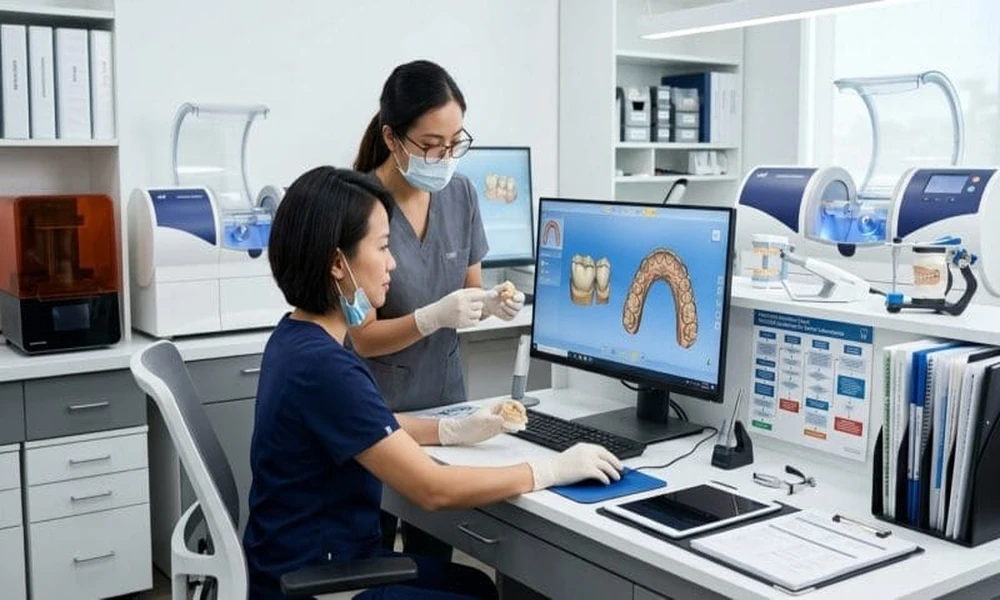
Everything in digital dentistry starts with one thing: the scan. A restoration can only be as accurate as the data it is designed from, which means a clear, complete scan is the foundation of a good result.
A high-quality scan shows every surface of the prepared tooth, including the margin, the line where the restoration will end. It also captures the neighboring teeth, the opposing teeth, and the way the bite comes together. If any of those areas are blurred, blocked by saliva or bleeding, or simply missed, the designer has to make guesses.
Small habits improve the outcome. Keeping the area clean and dry, retracting soft tissue carefully, and scanning slowly and methodically all help the scanner capture crisp detail. Reviewing the scan on screen before sending it lets the dentist spot gaps and fix them on the spot.
Design teams see this every day. Through a well-organized dental cad hub, incoming scans can be reviewed for completeness before design starts, and unclear areas can be flagged to the clinic quickly. A short message asking for a rescan is far better than a restoration that has to be remade.
The benefits reach patients directly. A good scan means fewer adjustments, fewer remakes, and fewer extra appointments. It also means the restoration is more likely to fit well the first time it is tried in.
When you watch your dentist scan your teeth, you are seeing the most important step in the process. Taking a few extra moments to get it right often saves far more time later on.
